Note: This page is automatically translated; this article was written in English, so if you are reading it in a different language and you get across strangely worded phrases or sentences that don’t make much sense, don’t blame me :))
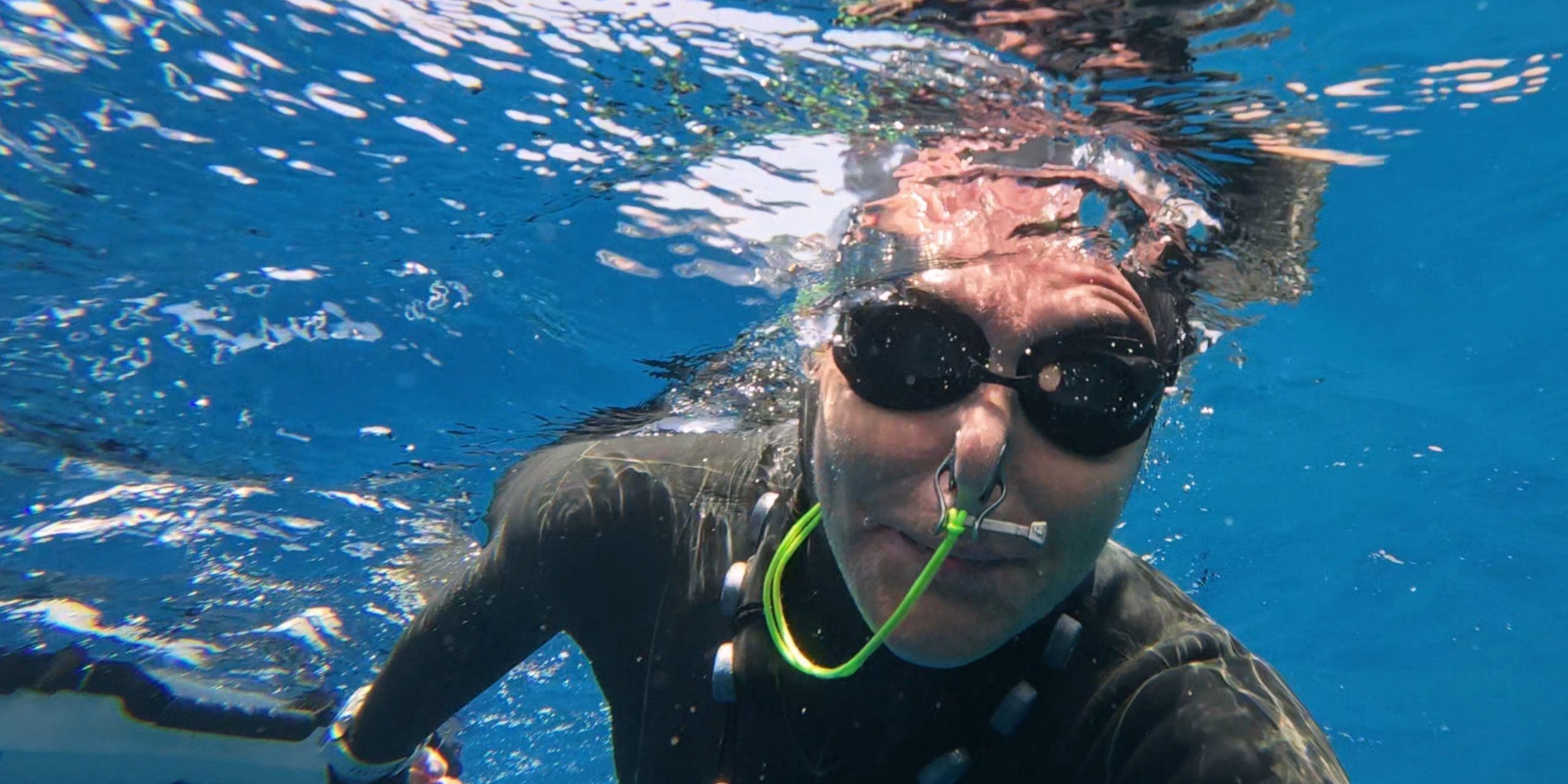
Dry /self equalising goggles made my Freediving a lot easier.
(And not only for really deep dives, in fact I use these goggles even for very shallow sessions.)
Here’s why
1- Help with narcosis
2- You are not blind at the surface
3- No longer need to bring a mask along for safety/video/setting up etc
4-They are more durable than you think
Narcosis:
Unfortunately I started to suffer from narcosis (mild to medium intensity until 95m and insane level past 95 – also depends on temp and darkness of course). Blindness makes it a lot worse, while keeping my eyes open and see clearly is a huge help as I can focus on external things (like rope, diveye, counterballast line, the blue hole arch etc) which helps my brain to process where I am and which direction to follow.
You can see clearly above the surface:
Most wet goggles brands have either poor vision (equally below and above the surface) or the ones with better underwater vision will make you blind above water because of the way the lense is mounted on the goggle. That means that when surfacing from a dive, the very moment you break the surface you are literally blind and you may get disoriented and not find the buoy/rope to rest on. (I stupidly lost a bronze medal at WC because I was hypoxic and I didn’t put my hand on the rope before surfacing: as I broke the surface I didn’t have anything to support myself on, swang my harm around to look for the rope, missed it and had a mild surface blackout. Luckily I’m not the only one who made this mistake, that means there are other stupid people around and I’m not alone).
No need to switch to mask in between dives:
This has little impact on deep diving training as you will do max 1 warm up then dive and usually you dont need to do much in between, but OH-MY-GOD, doesn’t it make everything so much easier on sessions where you do multiple dives!
Put your goggle on, do a dive, then take them off, put them in their box and attach it to the buoy because everyone has their hands everywhere and things get lost all the time, then do safety then secure the mask on the buoy and put the goggles on and start all over again. All this mask/goggles back and forth used to really frustrate me, as it causes a major waste of time on the surface as you can’t really start breathing up/relaxing for your dive while others are diving and if you happen to dive in colder water like me, every minute is precious and wasting time means fewer dives before you get cold.
They are durable:
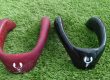
There are only 2 brands available and I have both but I prefer Evolve, mainly because they seem a lot sturdier to me:
My current pair is about 1.5 years old and last month it decided to go off on a lonely dive at the bottom of our 75m line, and joined my buddy’s pair that did the same a week prior (stupid goggles, what are they thinking!?). A kind tech diver picked them up after they stayed down respectively 2 and 3 weeks, and despite all sort of marine shit that grew on them, especially on the more fragile rubber membrane, after a good cleaning they are both still working perfectly, no tears nor leaking.
I also like the fact that the lens is small, flat and a lot less prone to scratching.
To those purists who keep telling me to dive with a noseclip and no goggles because it’s more “natural”, I say:
You are clearly a step behind in evolution and you still have whale genes, while I was gifted with more modern DNA, proper eye receptors and a wild survival instinct: when my eyelids feel water movement my soft palate locks shut and I can’t equalise, especially in colder water.
This is fairly common and affects people with different degrees of severity. It is definitely a no go for me. However, even if I could dive without goggles I wouldn’t do so on the deepest dives because I think it is a lot safer to be able to see: I think a fair amount of accidents in the past were caused by blindness, especially during bottom turns and on sled dives accidents.
Yes, goggles cost money, and so do high-end wetsuits, fins and monofins. If you dont throw them around carelessly they will last many seasons, unlike a wetsuit!